Eat better, live better
Nobody sticks to a diet. However, everyone sticks to habits—provided they require less effort than the alternative. Eating better isn't a matter of willpower: it's a matter of weekly organisation, and what is within reach on Tuesday night at 7 p.m.
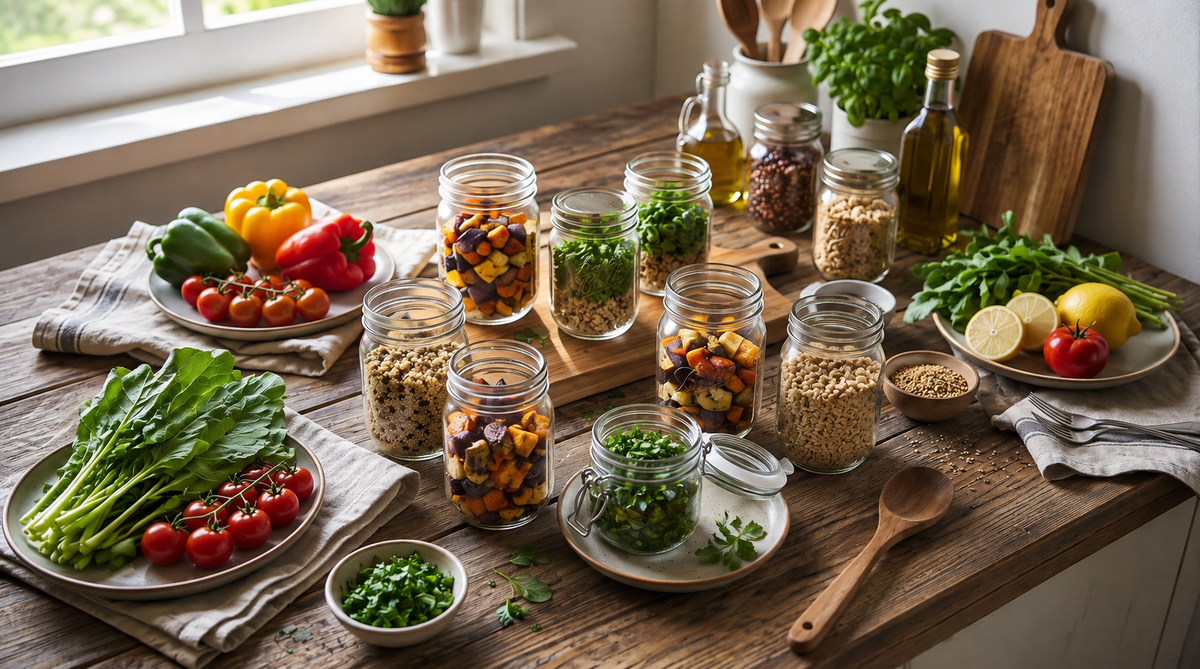
The moment of decision isn't mealtime
Most bad dinners aren't chosen: they are endured. You get home late, nothing is ready, and the quickest solution wins. The decision wasn't made at 7 p.m. — it was made on Saturday, the moment you didn't buy anything.
This is good news, because it shifts the problem to a time when you are available and clear-headed. A shopping list built around five dinners means five decisions made in advance, all at once, when you're calm.
Willpower is a resource that depletes throughout the day. Organisation does not.
One hour on Sunday
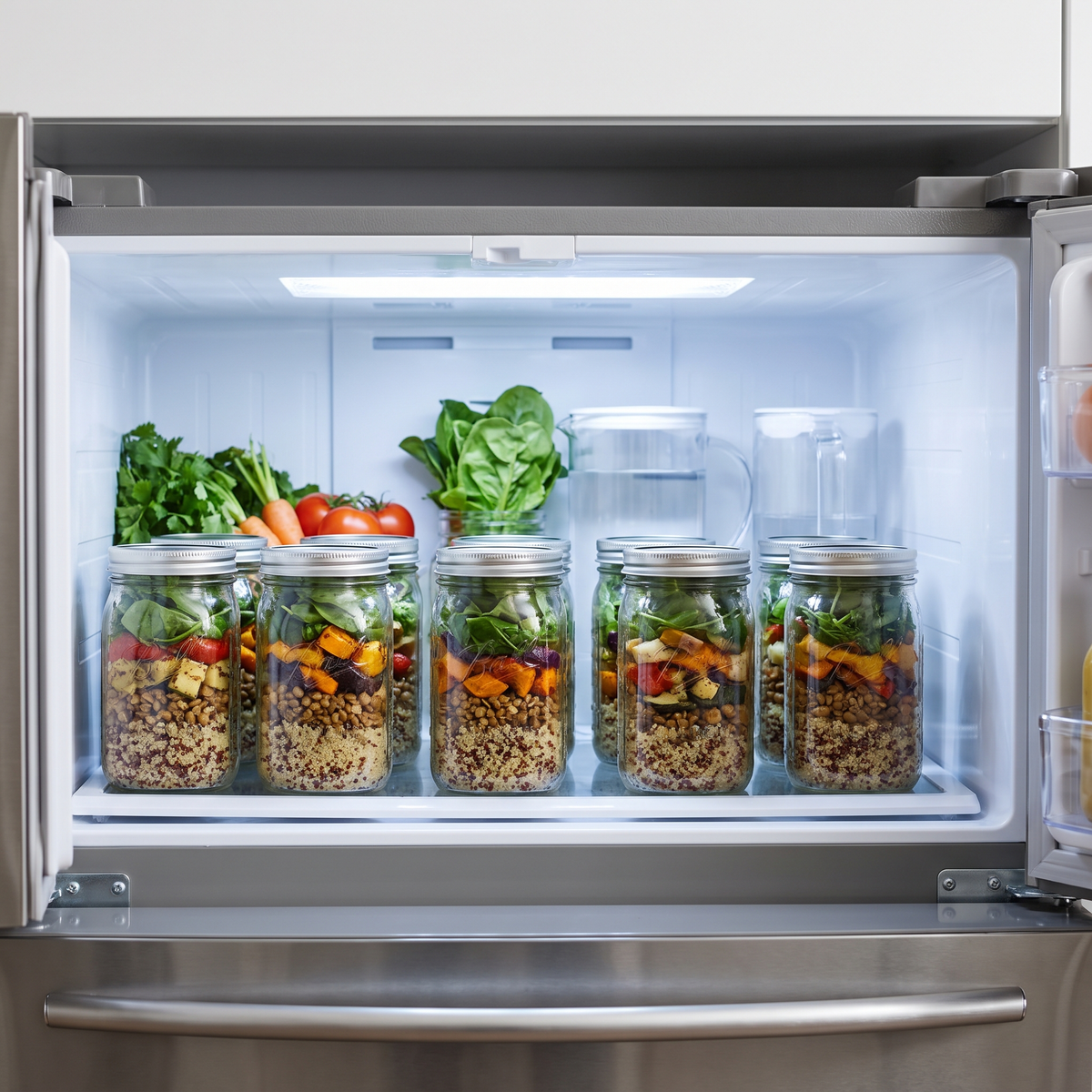
The idea isn't to cook five meals in advance — that gets old in two weeks. It's about preparing components that can be recombined differently each evening.
What to prepare on Sunday
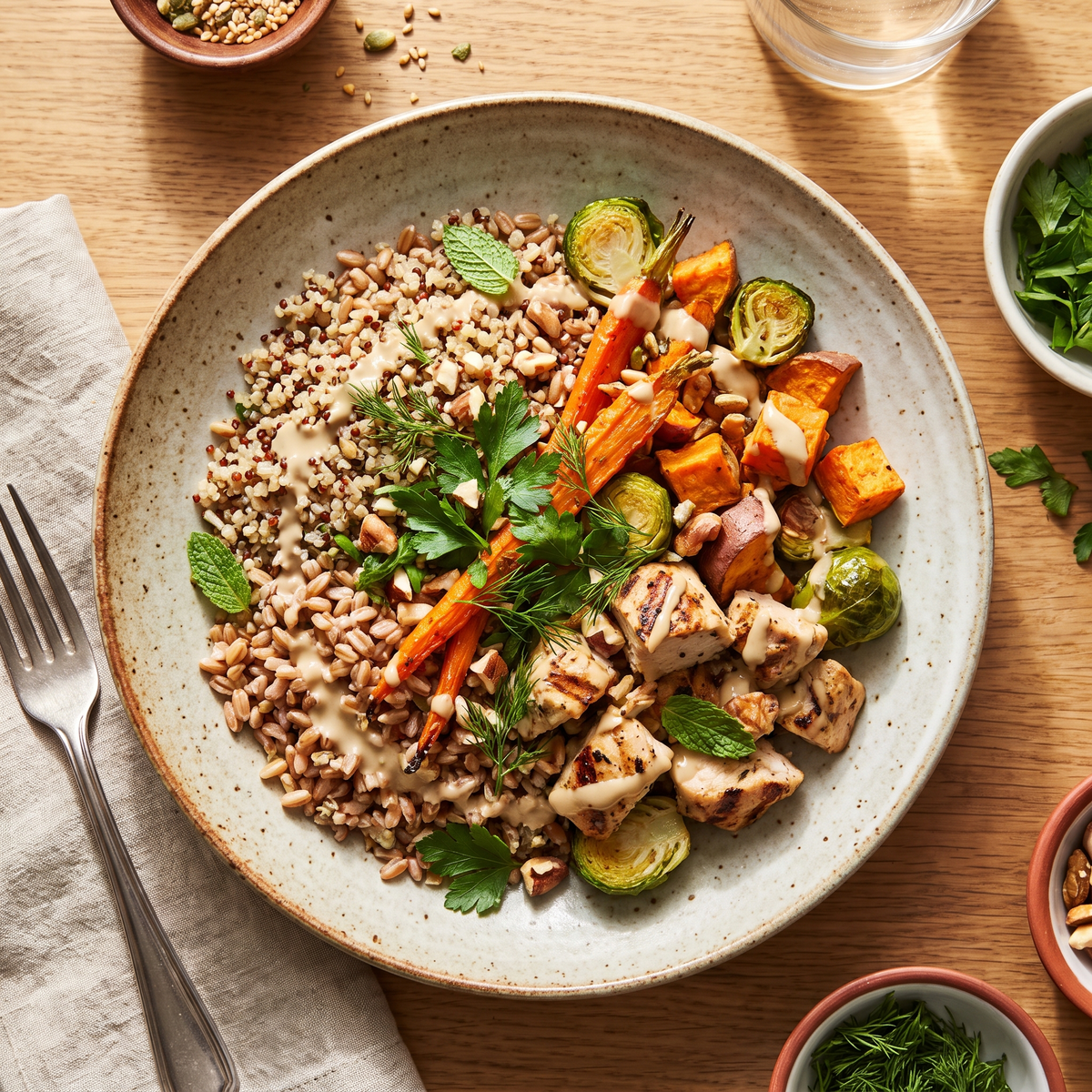
- A grain.Brown rice, bulgur, or lentils, cooked in large quantities. The base for three dinners.
- A tray of roasted vegetables.Root vegetables and squash, chopped into large pieces, all in one batch. Eat them hot, cold, in a salad, or blended into soup.
- A protein.Seared chicken, spiced chickpeas, or hard-boiled eggs. To be sliced at the last moment.
- A sauce.Yogurt-lemon-garlic, or tahini-water-lemon juice. It’s what changes the identity of the dish from one night to the next.
- Something fresh.Washed herbs, pickled red onion, toasted seeds. The contrast that keeps it from getting monotonous.
Five components, one hour, and five dinners that are nothing alike. On Tuesday night, assembly takes six minutes — less time than a delivery.
Three habits that stand the test of time
- Add before removing.Starting by adding a vegetable to every meal works better than starting by cutting something out. The substitution then happens on its own.
- Eat sitting down, without a screen.It takes about twenty minutes for satiety to set in. A meal wolfed down in eight minutes in front of a screen does not allow this time to elapse.
- Keep one exception per week.A framework that allows for no exceptions does not survive a difficult evening. One that provides for an exception survives the year.
Cooking more often, the only variable that matters
All studies on diet converge on one simple point that is rarely highlighted: what most clearly distinguishes diets is not any particular food, but the proportion of meals prepared at home. A home-cooked dish almost always contains less salt, less sugar, and more vegetables than its industrial equivalent—without any conscious effort being made.
This means that the question is not ‘What should I eat?’ but ‘What is stopping me from cooking tonight?’ Often, the answer is practical: a cluttered worktop, a pan that sticks, ten minutes of dishwashing at the thought of getting started. It is these frictions that must be eliminated first.
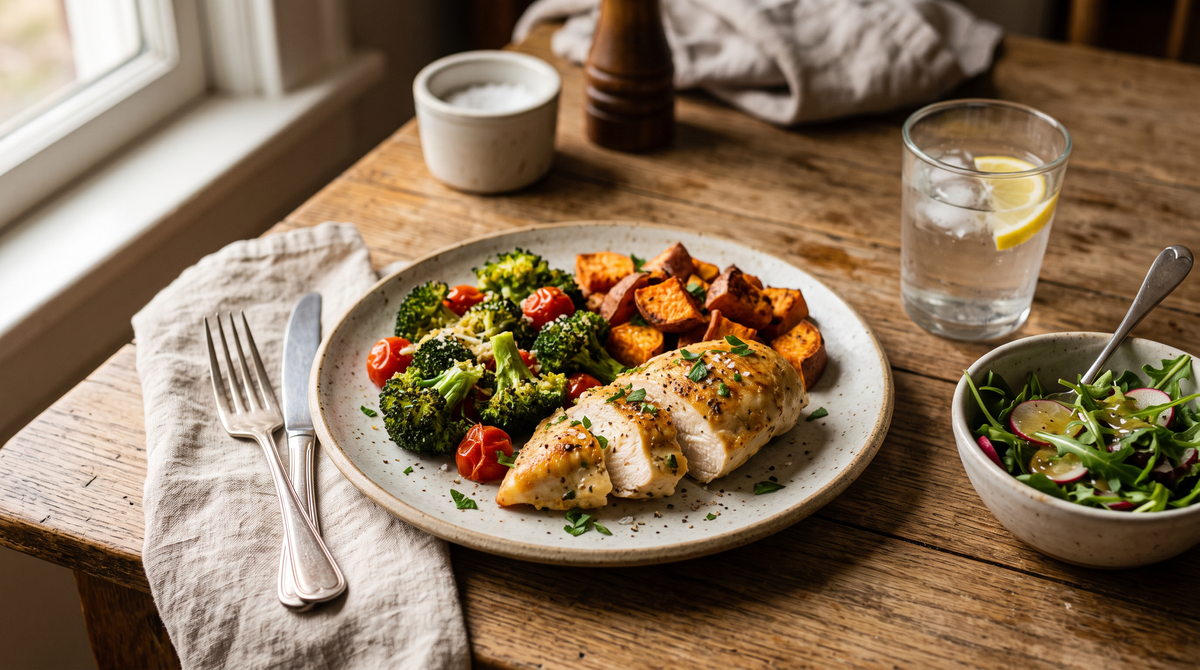
House tips
- Do your shopping after you've eaten.It's the most mundane — and the most effective — tip on this list.
- Keep healthy food at eye level.What you see when you open the refrigerator is what you eat.
- Cook double batches.The marginal cost of a second helping is close to zero; that of a second dinner is not.
- Clean as you cook.A clean kitchen at dinner time eliminates the main reason not to do it all again tomorrow.
Simple meals, every night
Discover the Maison Ferré® solid titanium cookware set.
Discover the collection