Love is also something you cook together
Cooking together doesn't mean cooking twice. It's a choreography: a shared worktop, two rhythms to synchronise, and a dinner that becomes the moment rather than just its conclusion. Here is how to turn an evening chore into something you look forward to.
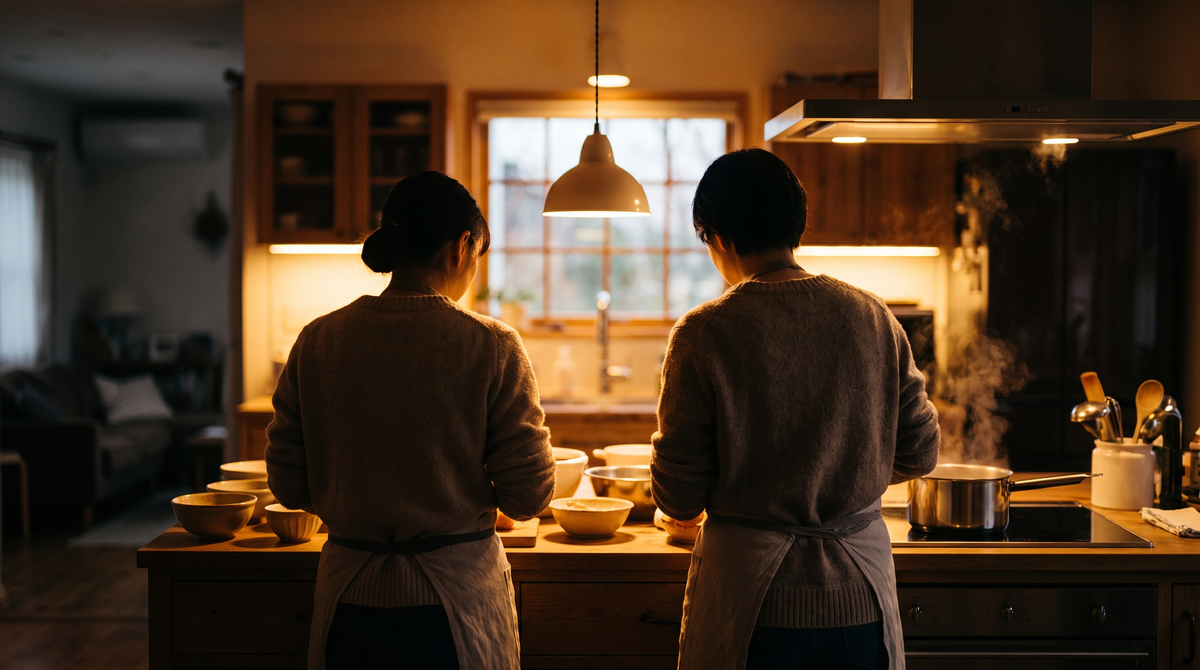
The problem isn't the cooking, it's the division of labour
In most households, cooking together boils down to one person cooking while the other hovers around. It’s not a lack of willingness: it’s an organisational problem. Without defined roles, the second person naturally steps back to avoid getting in the way—and ends up waiting.
The solution professional kitchens have long since found can be summed up in one word: stations. Each person has a zone, a task, a beginning, and an end. Applied to a Sunday dinner, it results in something very simple.
- Hot and cold.One handles all the prep work—chopping, marinating, salads, plating. The other manages everything that goes on the heat.
- Only one chef per dish.Two people seasoning the same dish means an over-salted dish. Whoever starts a dish finishes it.
- Wash up as you go.Whoever is waiting cleans. No one ends up alone at the sink at 11 p.m.
Two people in a kitchen doesn't mean twice as many hands. It means twice as much coordination to find.
The menu that leaves time for conversation
A successful dinner for two isn't the most technical one. It's the one that leaves you sitting across from each other rather than standing in front of the stove. The principle: only one element requires monitoring, while everything else is prepared in advance or cooks without intervention.
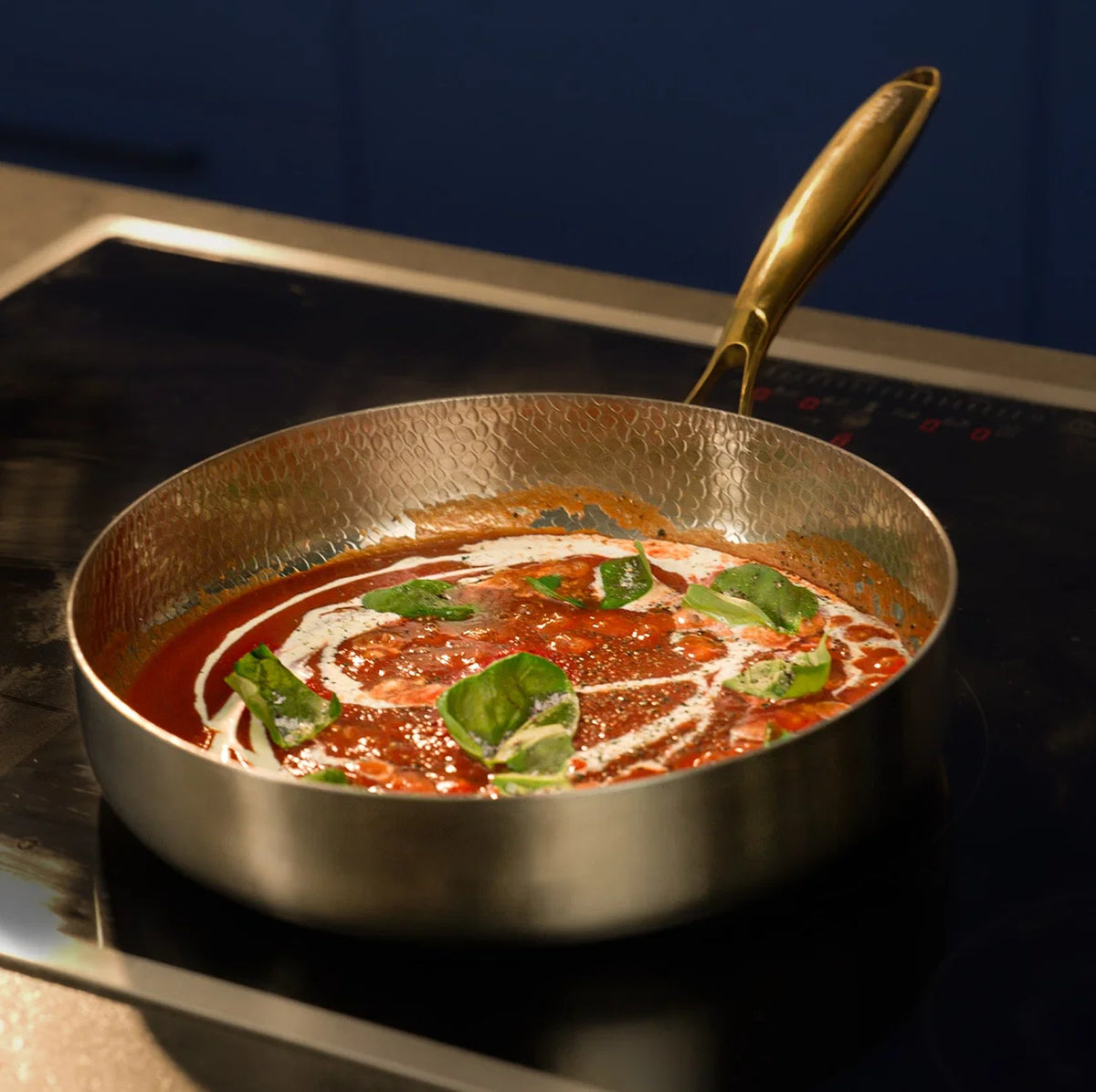
One pan, the whole meal
The constraint is intentionally strict: a single cooking utensil for the entire dinner. It changes everything, because it eliminates the moment when the kitchen becomes a battlefield and nobody wants to sit down anymore.
This requires a pan that can go from a high-heat sear to melting fruit without a transition, that can handle being put in the oven, and that can be put back into service between courses with a simple wipe of a sponge. That is exactly what a titanium surface is made for: no coating to worry about, no temperature to monitor, no time wasted.
Rituals are better than occasions
A successful birthday dinner once a year doesn't change anything in a relationship. A weekly date, even a modest one, changes a lot. Tuesday night, Sunday lunch, it doesn't matter: what counts is that it's predictable and that nothing else slips into that slot.
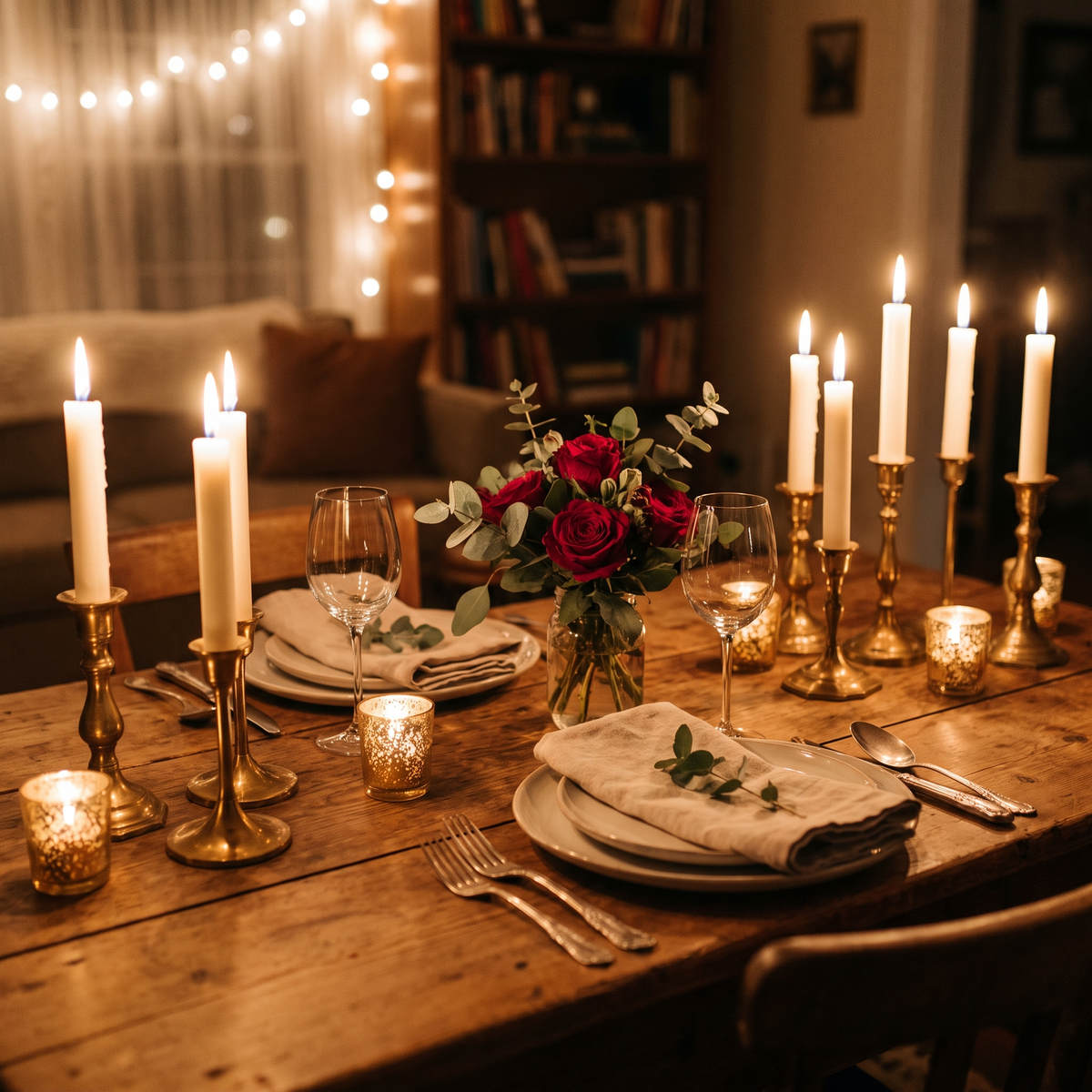
Three rules are enough to protect this time: no phones on the worktop, a proper table rather than a sofa, and music chosen together before starting. These are trivial details which, added together, make the difference between a meal and an evening.

House tips
- Set the table before cooking.The meal begins visually long before it is served — and you won't get round to it afterwards.
- Choose a dish that you are already familiar with.Save first attempts for a day when nothing is at stake.
- Plan for a single elaborate dish.The rest should be able to wait on the worktop without deteriorating.
- Keep the dessert in the same pan.A fruit roasted in the pan juices of a previous dish is better than a shop-bought dessert.
One utensil, the entire meal
Discover the Maison Ferré® solid titanium cookware set.
Discover the collection